How Does the Asylum Process Work in the UK?
Harry is one of our Refugee Integration Workers, working to support refugee families rebuilding their lives. He gives a summary of the many complex steps involved in the asylum process, and how, with the support of Upbeat Communities, refugee families and individuals are able to have hope and thrive in their new environment.
Here in the East Midlands, our communities are enriched every day by the incredible resilience and warmth of people seeking refuge. But if you have never experienced the asylum or resettlement system yourself, it can be incredibly difficult to understand. It is a complex, overwhelming process filled with legal jargon, strict deadlines, and waiting.
Here at Upbeat, we believe in the power of understanding and compassion, so we want to break down exactly what the asylum process looks like in England. Whether this is your first time learning about our organisation, or you are looking to understand the journey of refugees in greater detail, this guide is for you.
There is a climate of hostility all around us at the moment, evident in government policies, news headlines, and general public opinion. But it’s important to remember that behind every number used in a prejudiced policy or scare-mongering statistic is a human being — a mother, a brother, a former teacher or engineer — simply looking for a safe place to rebuild their life.
What’s the difference between a refugee and an asylum seeker?
Before we look at the process, it helps to understand the terms. Often, the words "asylum seeker" and "refugee" are used interchangeably, but they mean different things in the eyes of the law:
An asylum seeker is someone who has arrived in the UK and formally asked the government for protection, but is still waiting for a decision on their application.
A refugee is someone whose claim for asylum has been accepted by the government. They have been granted "Leave to Remain," meaning they are legally recognised as needing protection and have the right to stay.
There are also official Resettlement Schemes run by the UK government. People arriving through these official routes are usually granted a specific type of visa immediately upon arrival. A very small number of people are eligible for these schemes; most people have to use other methods to get to safety, and the journey is often much harder and more uncertain for people in this position.
Step 1: Arrival and Initial Accommodation
When a person arrives in the UK and claims asylum, they are entirely dependent on the Home Office (the government department responsible for immigration). Because asylum seekers are not legally allowed to work while waiting for their decision, they rely on government support for their survival. This amounts to just £9.95 per week for those living in hotels or hostels—which has to stretch to clothing, transport, phone credit, and other necessities.
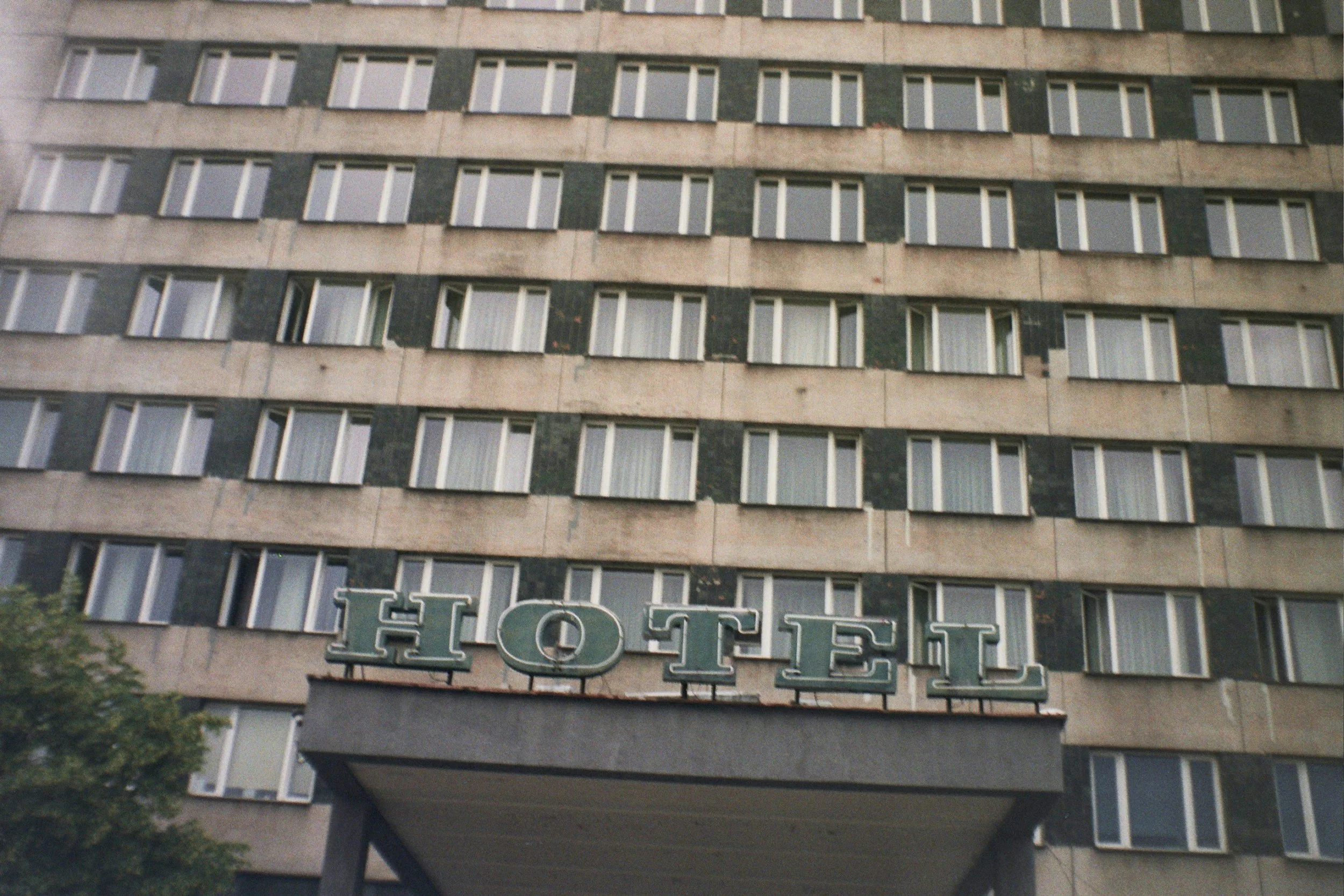
Far from being the ‘five-star hotels’ you might have read about in misinformation campaigns, hostels and hotels often have very basic facilities, and are often overcrowded. While it provides a roof over their heads, living in a single hotel room for months — sometimes years — can cause severe mental health problems. The lack of space, privacy, and routine is incredibly draining.
After this initial phase, participants are usually moved to "dispersal accommodation" — shared houses or flats located in designated areas across the UK, including Derby. There can be many problems with these types of accommodation, too. Maria (name changed) shared how she felt when she and her young family moved into their dispersal accommodation in Derby: “I remember that first night when we arrived in Derby. I was crying and crying because the house was in a very bad condition. I couldn’t stop thinking, ‘What’s going to be our lives from now on? What happens if I need help—will anyone help me?’”
Step 2: Waiting for The Interview
The core of the asylum process is the "Substantive Interview." This is a rigorous, deeply detailed interview with the Home Office where the person seeking sanctuary must explain exactly why they fled their home and provide evidence of the danger they face. This process requires immense courage. Participants are often asked to recall deeply traumatic memories, and having accurate translation can sometimes be problematic.

There is an uncertain period of time where individuals have to wait for their interview—and after they’ve completed it, another period of waiting for the outcome. As an organisation, we see first-hand how much the waiting and uncertainty impacts people.
“The waiting was the hardest part,” shares Sara (name changed), an expert by experience and participant in our community. “You cannot plan for tomorrow. You cannot work. You just sit with your thoughts and hope someone believes your story.”
During this time, our team works hard to provide English classes, community meals, support groups, and a listening ear at our Integration Hub. English classes are particularly important as asylum seekers don’t have access to learning English elsewhere until they’ve been in the UK for 6 months—and even then, there may not be space in local colleges, or sufficient hours of classes for them to properly learn the language.
All Upbeat’s activities remind people that they are valued human beings, not just a case number.
Step 3: The Decision and The 'Move-On' Period
If the Home Office approves the claim, the person is granted refugee status. This is a moment of immense relief — but it also triggers one of the most challenging phases of the journey to safety.
When a person receives their refugee status, they are given a Biometric Residence Permit (BRP), which gives them the right to work, rent property, and access public funds. However, their Home Office financial support and accommodation ends just 28 days after their decision is granted.
This 28-day window is known as the "move-on period." Within just four weeks, a newly recognised refugee must:
Open a bank account.
Apply for Universal Credit (which takes 5 weeks to process).
Find a private landlord willing to rent to them, often without a guarantor or a deposit.
Secure employment.
Because this timeline is incredibly tight, many people are at risk of experiencing homelessness during this transition. Without immediate intervention, individuals who have finally been granted safety can find themselves sleeping rough and entirely destitute.
Elliot, Integration Manager at Upbeat’s Integration Hub, shared:
“An increasing number of participants are falling asleep on the sofas in our Integration Hub, or falling asleep in our English classes, due to sleeping rough. Almost daily we have referrals through for our Hosting projects, but we do not have enough hosts to meet this need. When individuals are given emergency accommodation elsewhere, it is often not appropriate, and they would prefer to sleep outside.”
Umar (Upbeat Participant, name changed), shared how it felt when he became homeless: “When my claim was accepted, I was happy, but afterwards it was very stressful for me. I had to leave my accommodation and sleep outside. I thought, ‘Where will I go? What will I do?’ I didn’t have anyone to stay with.”
This is the main reason why Upbeat Communities started its hosting projects, in both Derby and Nottingham. Our hosting schemes train volunteers to offer their spare room to refugees like Umar, who are in need of a place to stay whilst they work out their next steps. Find out more about hosting.

Step 4: Building a Life in the Community
This is where the true meaning of integration begins, and where Upbeat’s work is most vital. Truly integrating in a new country is not just about having a legal document; it is about belonging.
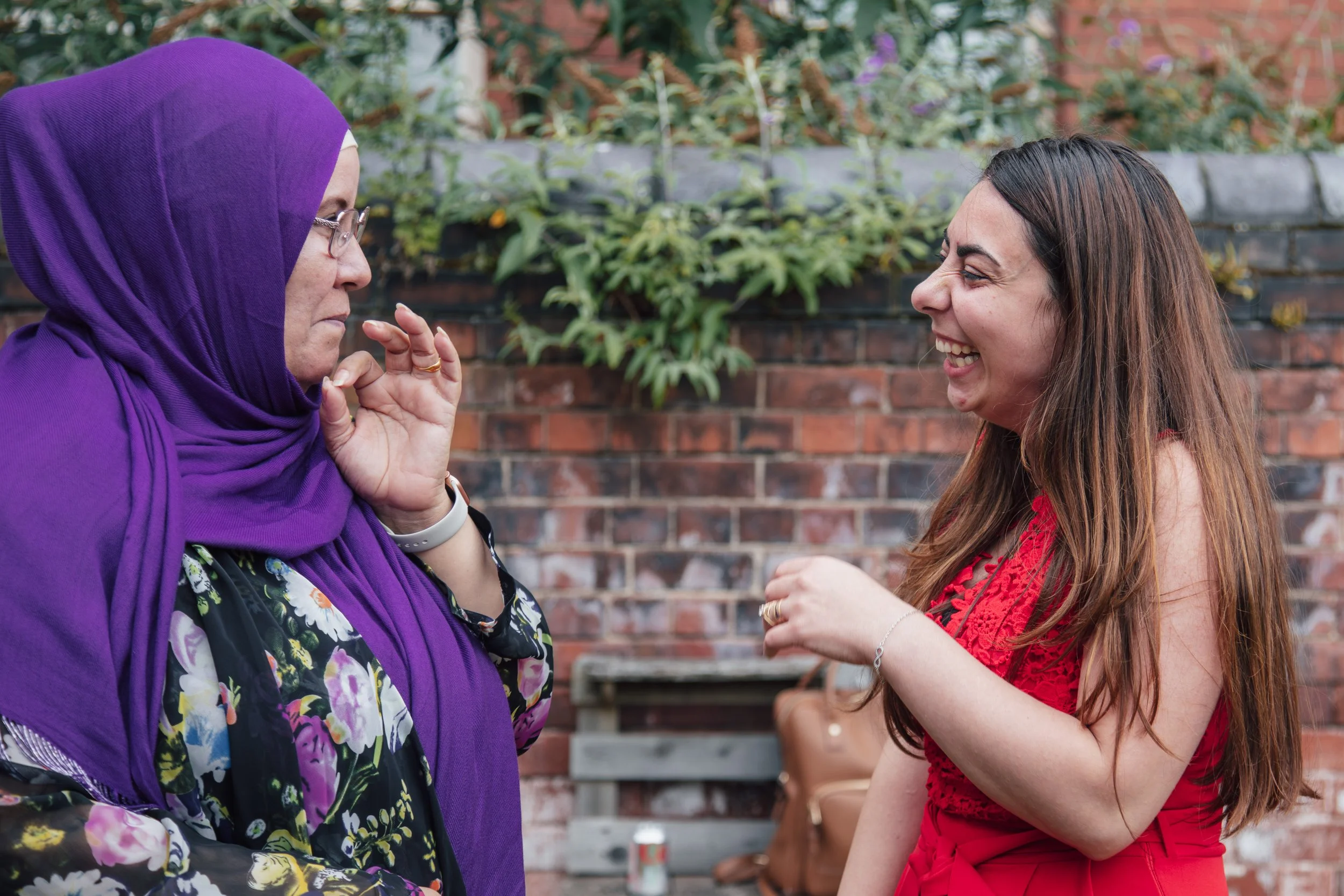
At Upbeat Communities, we believe nobody should face the transition into independent living alone. We support individuals in navigating the complexities of an entirely new country, registering with a GP, and finding employment. We also pair newly settled refugees with local volunteers and organisations like ours who help them practice English, find a solicitor, understand local customs, or simply share a cup of tea.
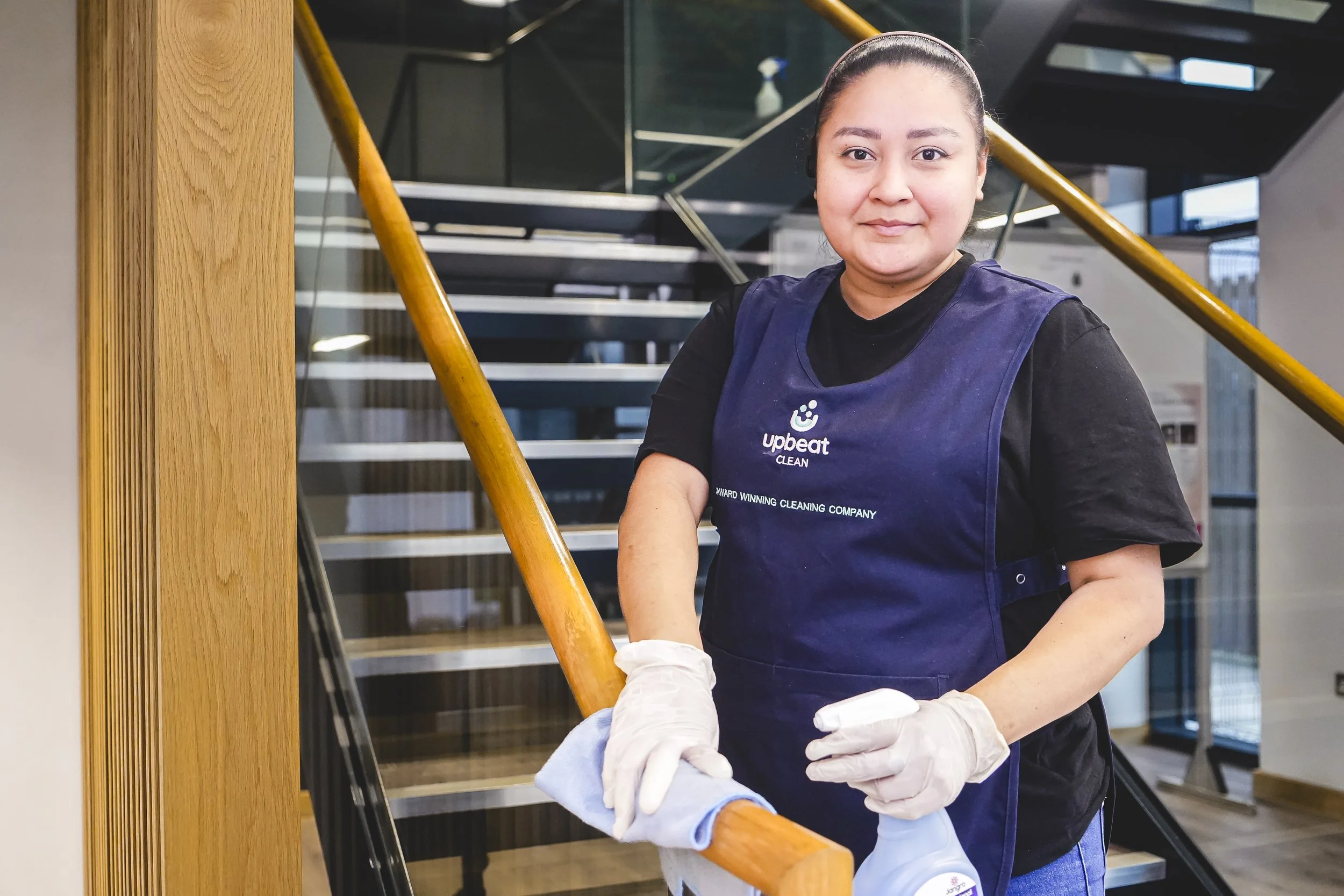
When people are given the right support, the results are beautiful. At Upbeat, we’ve seen former asylum seekers become local translators, administrators at large corporations, cleaning managers through Upbeat Clean (our social enterprise), barbers, healthcare professionals, or dedicated volunteers who give back to other refugees.
While these jobs are a brilliant starting point for many, lots of refugees have come from highly qualified professions in their home countries, working as architects, journalists, government policy-makers, university lecturers, musicians, business owners, event managers, political activists, doctors, nurses, lawyers, engineers, or teachers. Sadly, it is very difficult for many people to re-train in these professions in a new country, as their qualifications usually aren’t recognised. The transition to manual or entry-level jobs can be difficult for some, though many are grateful for any opportunity to contribute to life in the UK and earn a living.
Refugees face many barriers to working in the UK. Some employers aren’t sure how to support people from a refugee background, or may even be prejudiced against non-English names on a CV. Plus, it takes a long time to become fluent in a language; many refugees find language to be a huge barrier to finding work. Our social enterprise, Upbeat Clean, works to overcome these barriers by partnering with local businesses to provide employment for refugees. Find out more about Upbeat Clean.
How You Can Help
The journey to integration is long, and the systems in place are difficult to navigate. But a compassionate community makes all the difference. When we replace fear with understanding, we help ensure that every person seeking sanctuary feels safe, valued, and welcome.
We are currently urgently looking for more hosts to offer a safe place to stay for refugees in our community, while they figure out their next steps. If you’re interested in finding out more, head to upbeatcommunities.org/hosting.
Written by Harry — Refugee Integration Worker
References & Further Reading
This blog has been informed by the following resources:
The Home Office / GOV.UK:Claiming Asylum in the UK – Details on the legal process, rights, and the 28-day move-on period. gov.uk/claim-asylum
The Refugee Council:The Truth About Asylum – Comprehensive data and explanations on the realities faced by people in the UK asylum system, including the risks of destitution. refugeecouncil.org.uk
UNHCR (The UN Refugee Agency):What is a Refugee? – International definitions and statistics regarding global resettlement and sanctuary. unhcr.org/uk
British Red Cross: Information on refugee support services and the specific challenges of the 28-day move-on period, which often leaves people at risk of sleeping rough. redcross.org.uk
Migrant and Refugee Access to Health Systems: Challenging (Im)mobilities in Healthcare. Edited by Luca Follis, Associate Professor in Criminology, Department of Sociology and Criminology, University of Sussex, Karolina Follis, Professor in Politics and Society, Department of Politics, Philosophy and Religion, Lancaster University and Nicola Burns, Senior Lecturer in Disability Studies, School of Social and Political Sciences, University of Glasgow, UK.