Amara’s Story | Celebrating Resilience This Mental Health Awareness Week
Today marks the start of Mental Health Awareness Week. In our work empowering refugees in Derby, we witness the aftermath of the most harrowing circumstances imaginable. Yet, day in and day out, our participants show up with smiles, an eagerness to learn, and a desire to connect. This week, we want to recognise their incredible courage. It takes immense dedication to step into a new space when you feel lost, and we are constantly inspired by the strength it takes to prioritise wellbeing in the face of uncertainty.
Amara’s Story
We first met Amara (name changed) when she joined an Upbeat Women session. Having fled the horrifying civil war in Sudan, she came to us in a time of difficulty; what she found was a sense of belonging.
“One of the first projects I remember was a creative session,” Amara recalls. “We were making necklaces, and I felt so proud of myself! I felt like I was accomplishing something, and it gave me confidence to get some of my independence back and I felt encouraged to look after myself because I could see I had value and I was useful.”
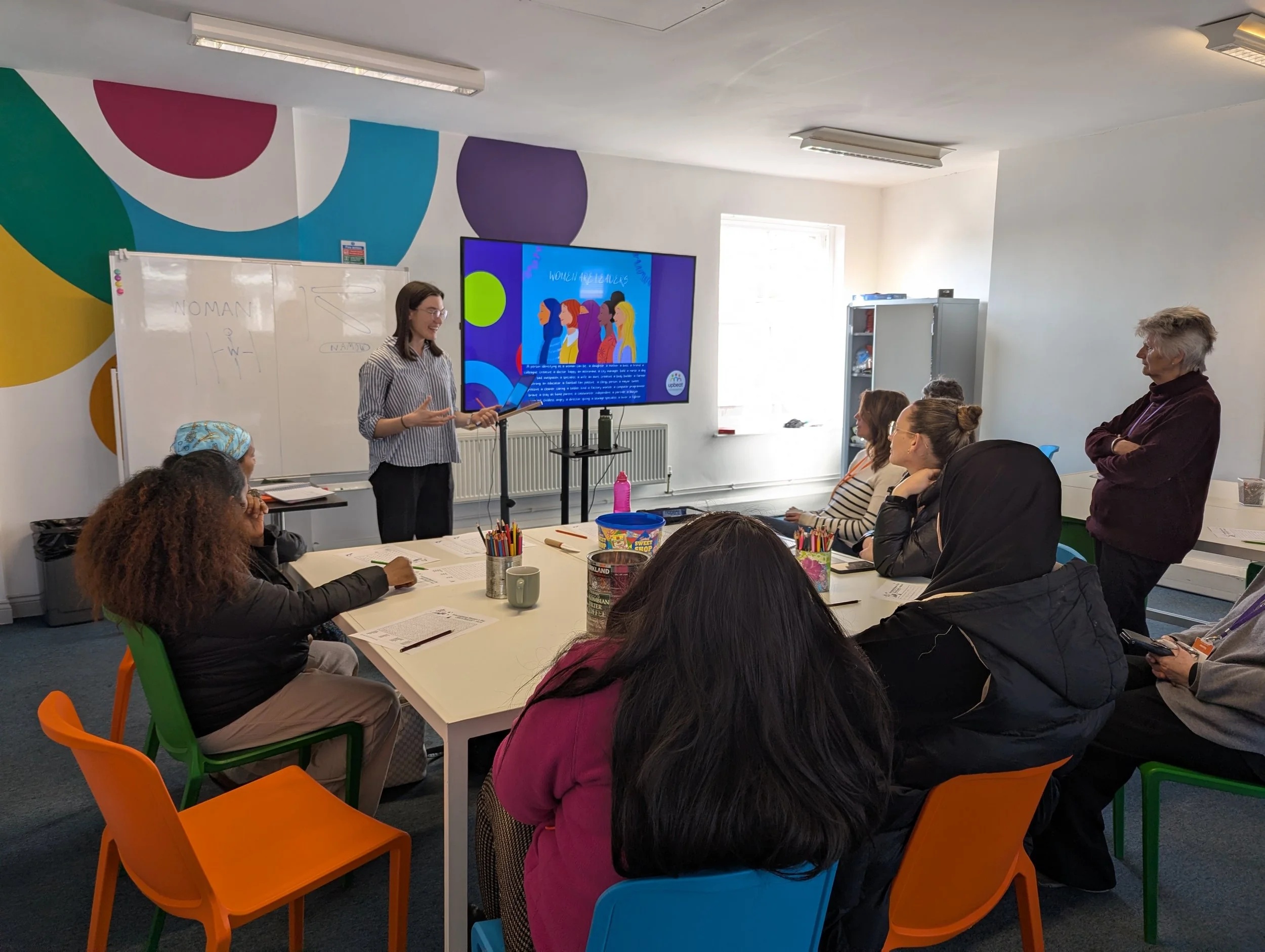
Our Upbeat Women sessions are designed to be more than just a place to create, they are a sanctuary. It is a space to decompress, make friends, and simply be without judgment.
“There is a sense of family here,” says Amara. “We all come from different places, but we are all the same. I have met beautiful people here, who have impacted my life. I was a stranger and I was lost but Upbeat helped me anyway.”
For Amara, the support went far beyond practicalities. “The staff took the time to listen and make me laugh. Upbeat has shown me that support beyond paperwork – they showed me friendship. Despite how I might feel at home, Upbeat always makes me smile. Whatever tomorrow brings, I know I can deal with it because I have people here who support me.”
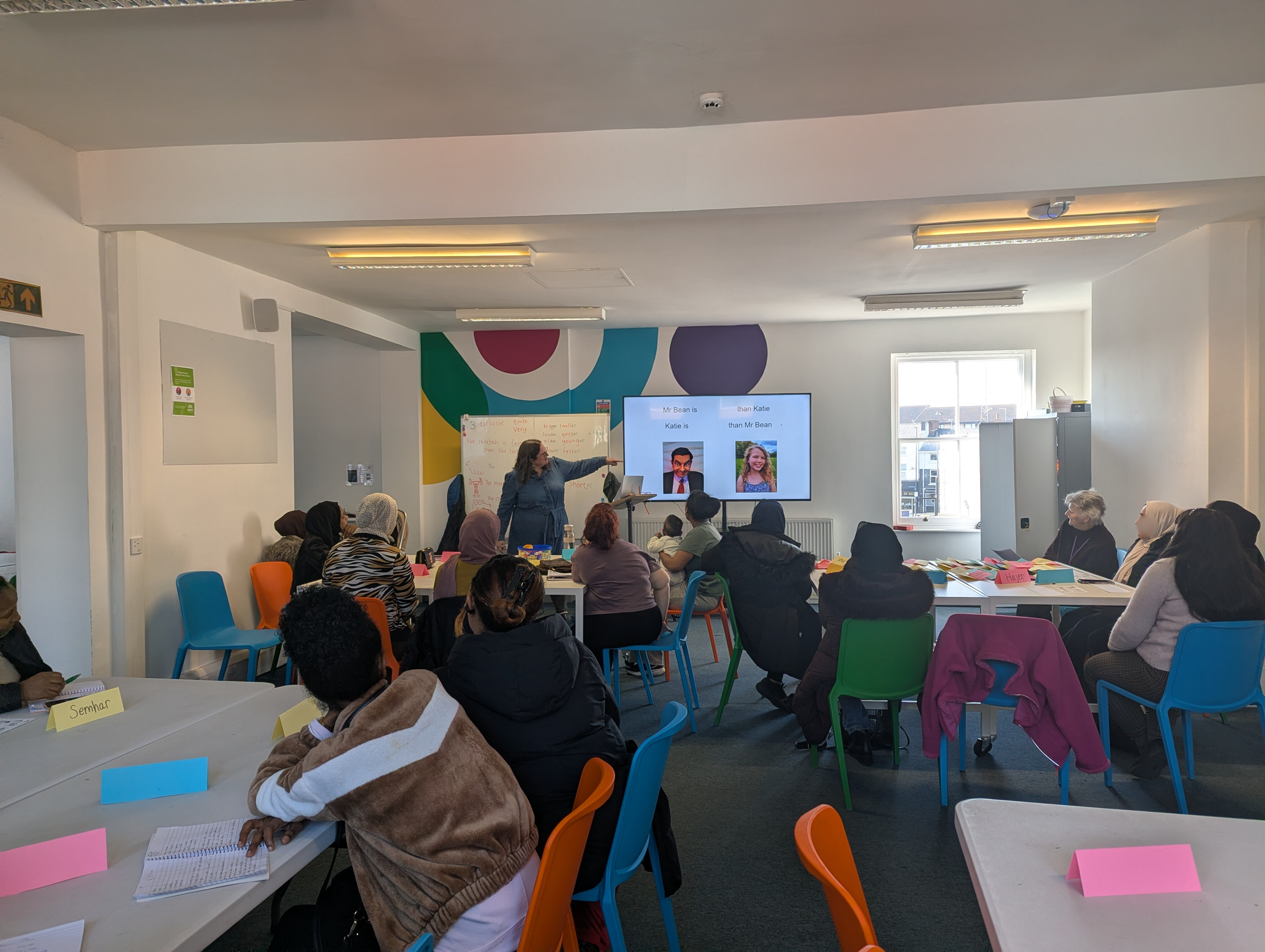
At Upbeat Communities, we strive to provide a safe environment where refugees can process their emotions and gain practical tools for their mental health.
People seeking safety are at particular risk of mental health issues which may develop due to their experiences in their home country, the effects of trauma from their journey here, or even after they arrive in the UK as a result of poor living conditions, poverty, homelessness and isolation, for example.
Grace, one of our Refugee Integration Workers, recently led a series of wellbeing courses specifically for women. These sessions focused on understanding and managing mental health in a new cultural context. The impact has already reached beyond the classroom:
“I have been practicing the tools Grace taught us,” one participant shared. “It has been so helpful that I even taught them to my children when they were feeling overwhelmed. This course taught me that it is important to share what is really happening. It might not fix every problem, but it makes us feel together and that we are not alone in this country.”
Grace added: “Working in the refugee sector, there are many difficulties participants face which we cannot solve - the stress of the asylum process, lack of housing, and struggles to access services, for example.
“One of the things we can do, however, is support and foster their resilience, so they can engage with these stressors to the best of their abilities. The wellbeing sessions were put in place to teach women about the different areas of wellbeing (mental, social, and physical), and how each of them need unique attention and care,” She added.
“The intention behind these sessions was that the women would finish the course more aware of their needs and the impact of stress on their health, and that they would feel empowered to use these skills they acquired to support them as they continued rebuilding their lives in the UK.”
This Mental Health Awareness Week, we celebrate the resilience of refugees like Amara. Your support allows us to keep these vital sessions running, providing a lifeline for those navigating their darkest moments. Read more about mental health of asylum seekers and refugees in the UK below.