Zahra’s Sudanese Mullah
Recipe by Zahra. Written by Momo.
Zahra (name changed) is a kitchen volunteer at Upbeat. She is warm, charming, and passionate about food. Once she starts talking about cooking, it is almost impossible to stop her.
One day, she told me about Mullah, a thick stew eaten throughout Sudan. Traditional versions are often tomato-based and made with lamb or chicken, while others use peanuts or okra to create a rich texture. Whatever the ingredients, Zahra explained that Mullah should be hearty, comforting, and full of flavour.
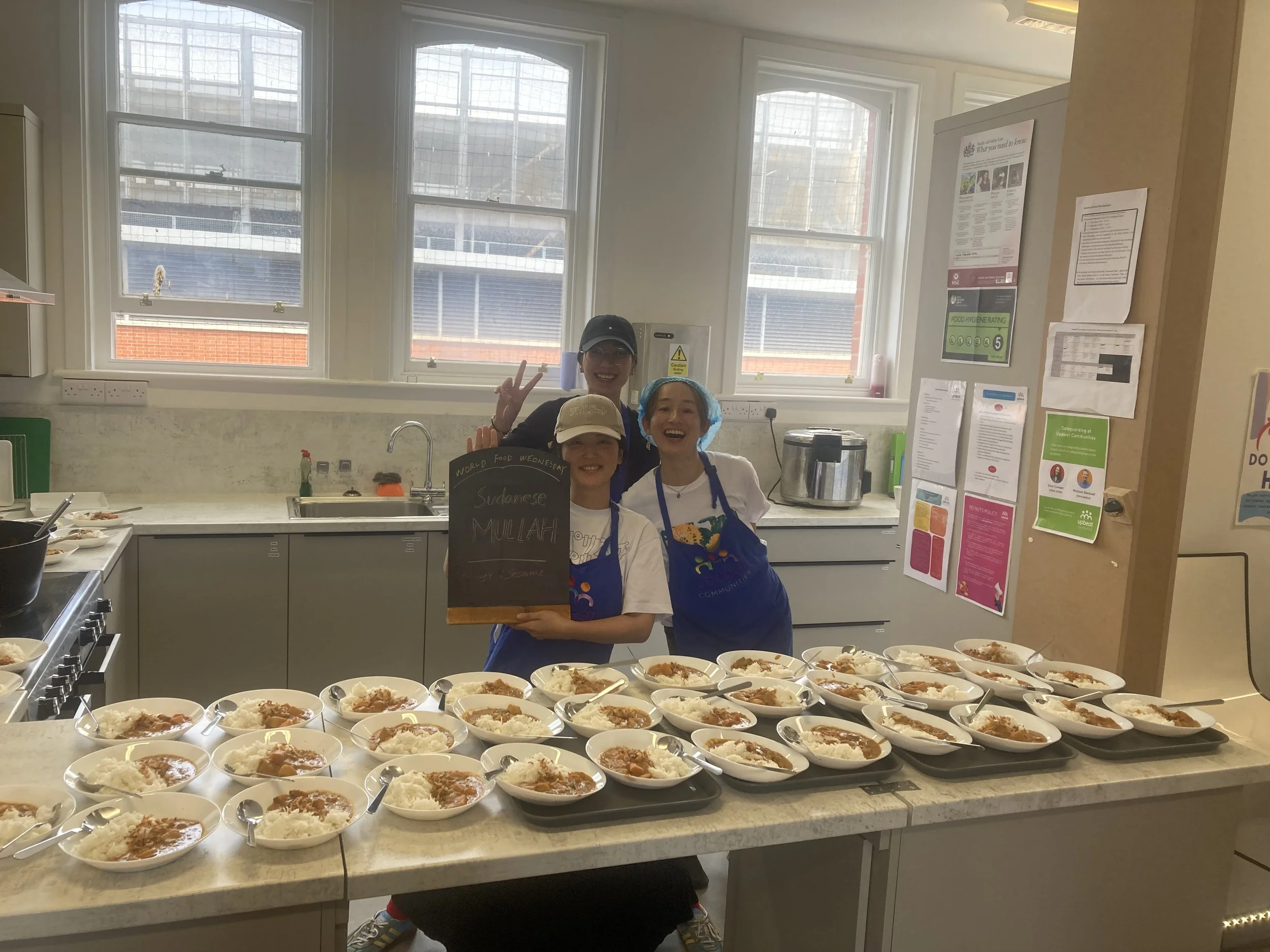
“It’s the kind of dish where almost any vegetable will work,” she told me. “You can make it from whatever is left in the fridge.” Adapting the recipe for Upbeat came with challenges. We could not use meat, our nut policy ruled out peanuts, and okra was beyond our budget.
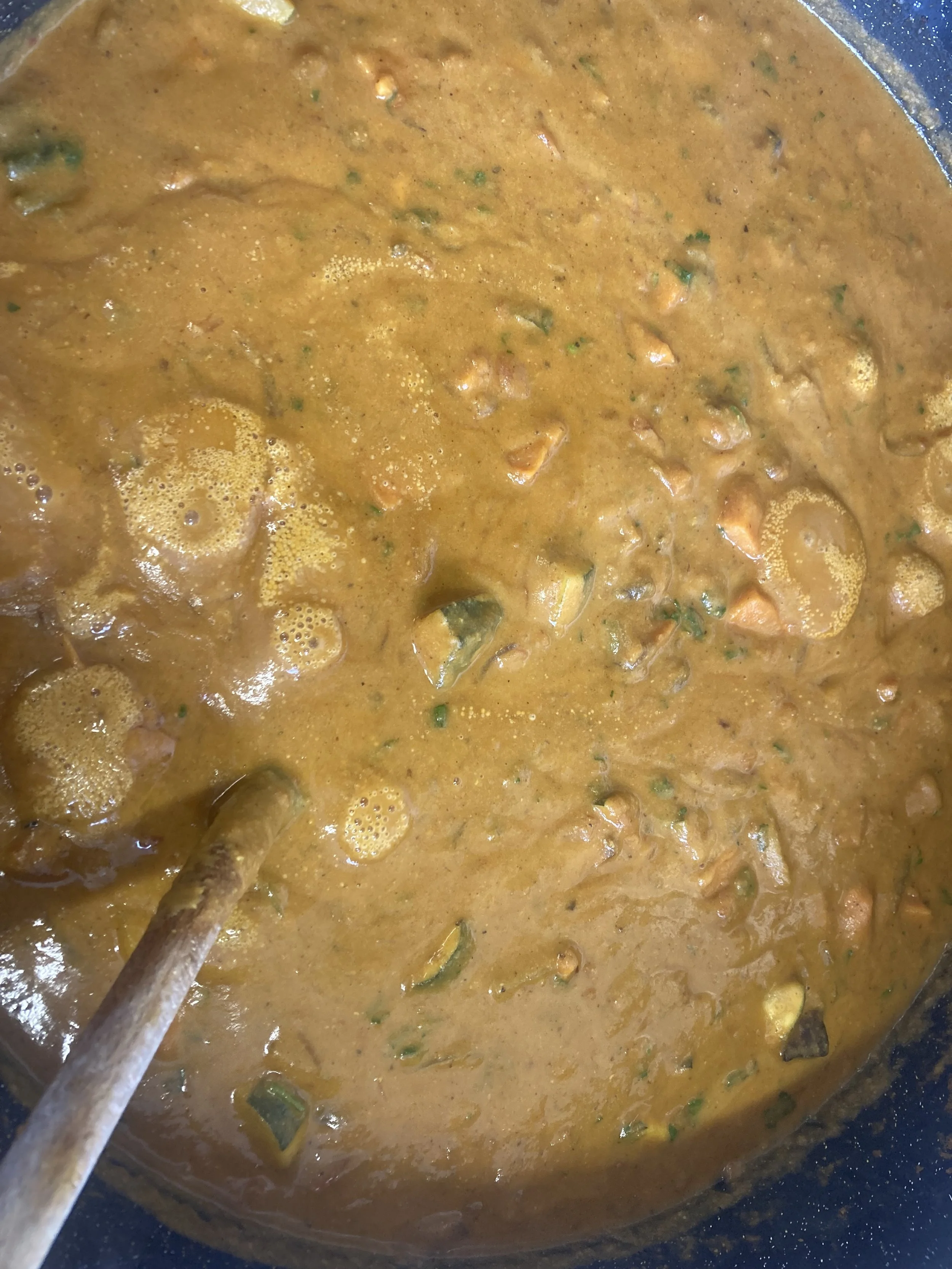
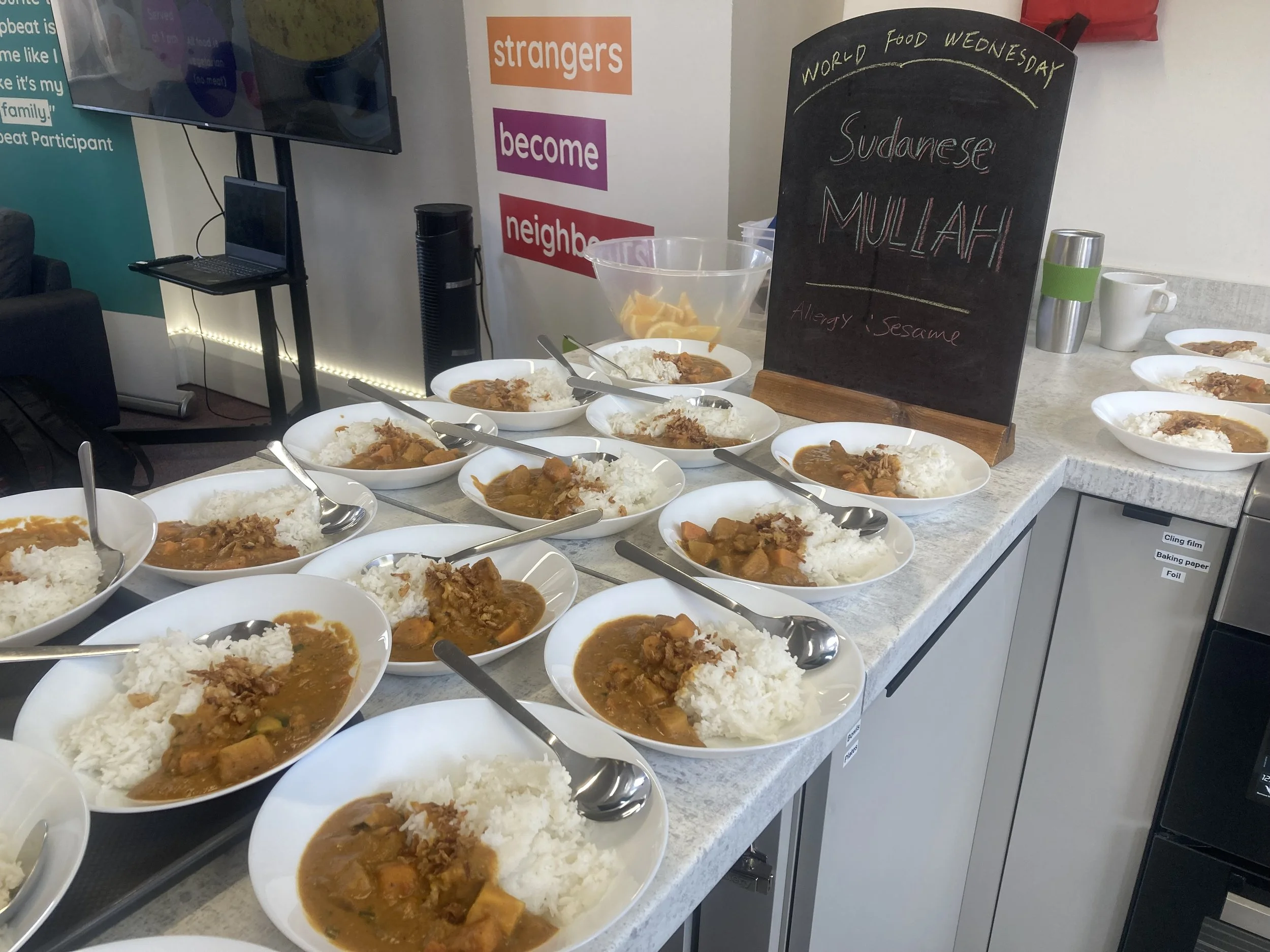
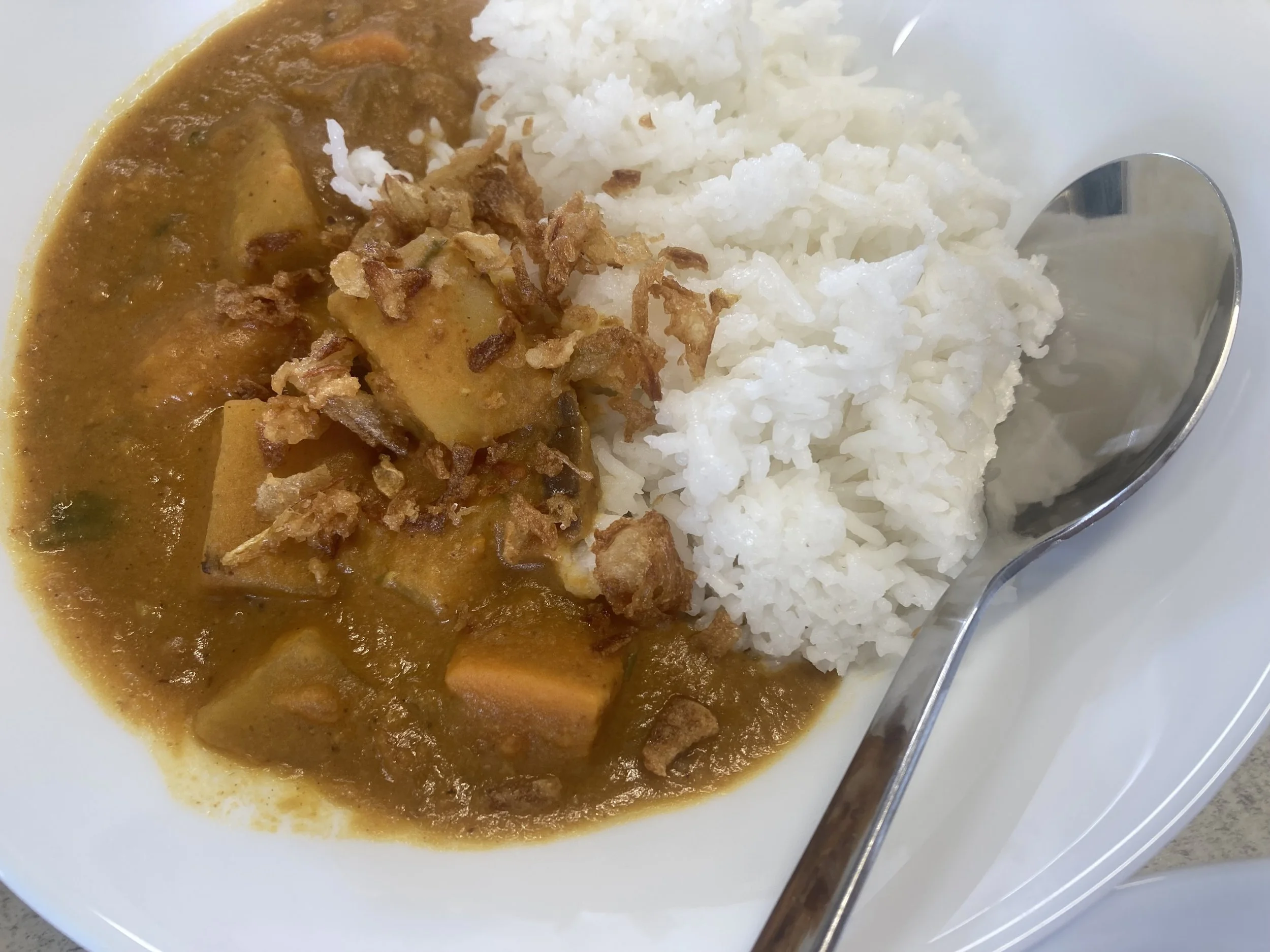
To recreate the thick texture, we cooked red lentils until soft and blended them into a paste, then added tahini for extra richness. We also roasted large pieces of potato and sweet potato to add flavour and substance. The result was our own vegetarian version of Mullah—different from the traditional recipe but inspired by the qualities Zahra had described.
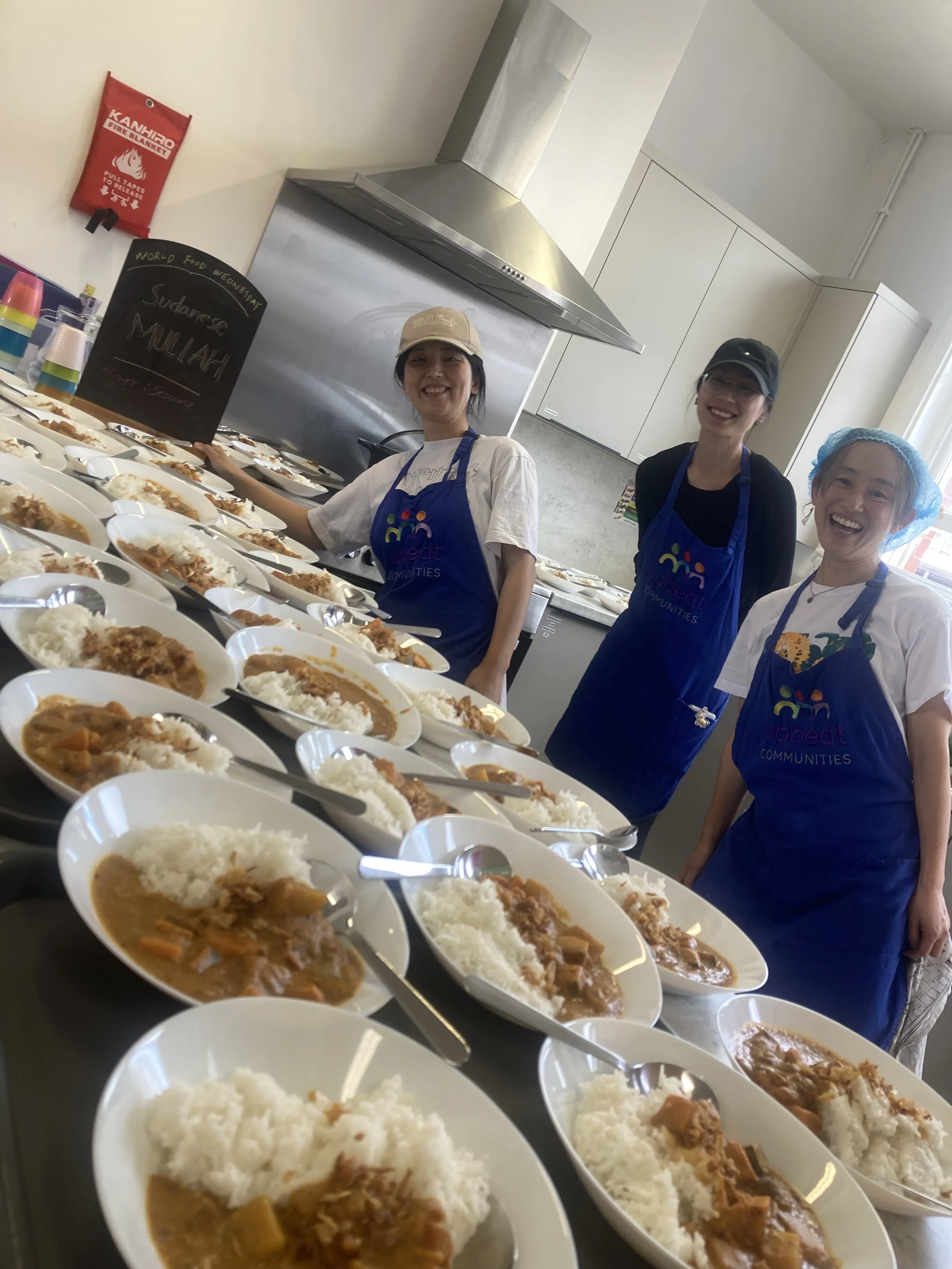
After lunch, a group of Sudanese participants came to the kitchen to tell us how much they had enjoyed the meal. They also explained that Mullah is often eaten with “asida”, a soft dough-like staple used to scoop up the stew.
What struck me most was that none of the kitchen volunteers had ever tasted Mullah before. Most of us had never even heard of it. Yet, armed only with Zahra’s descriptions, we had managed to create something familiar enough for Sudanese participants to recognise and enjoy. Their approval felt like the highest praise possible.
Afterwards, I sent Zahra a message to thank her for sharing the recipe and to tell her how well it had been received. One final surprise came from Ferhad (name changed), a Kurdish volunteer who is famously not a fan of beans or lentils. Yet he happily finished his bowl and declared it delicious.
Perhaps the lesson is simple: if someone says they do not like beans, try turning them into a paste first.
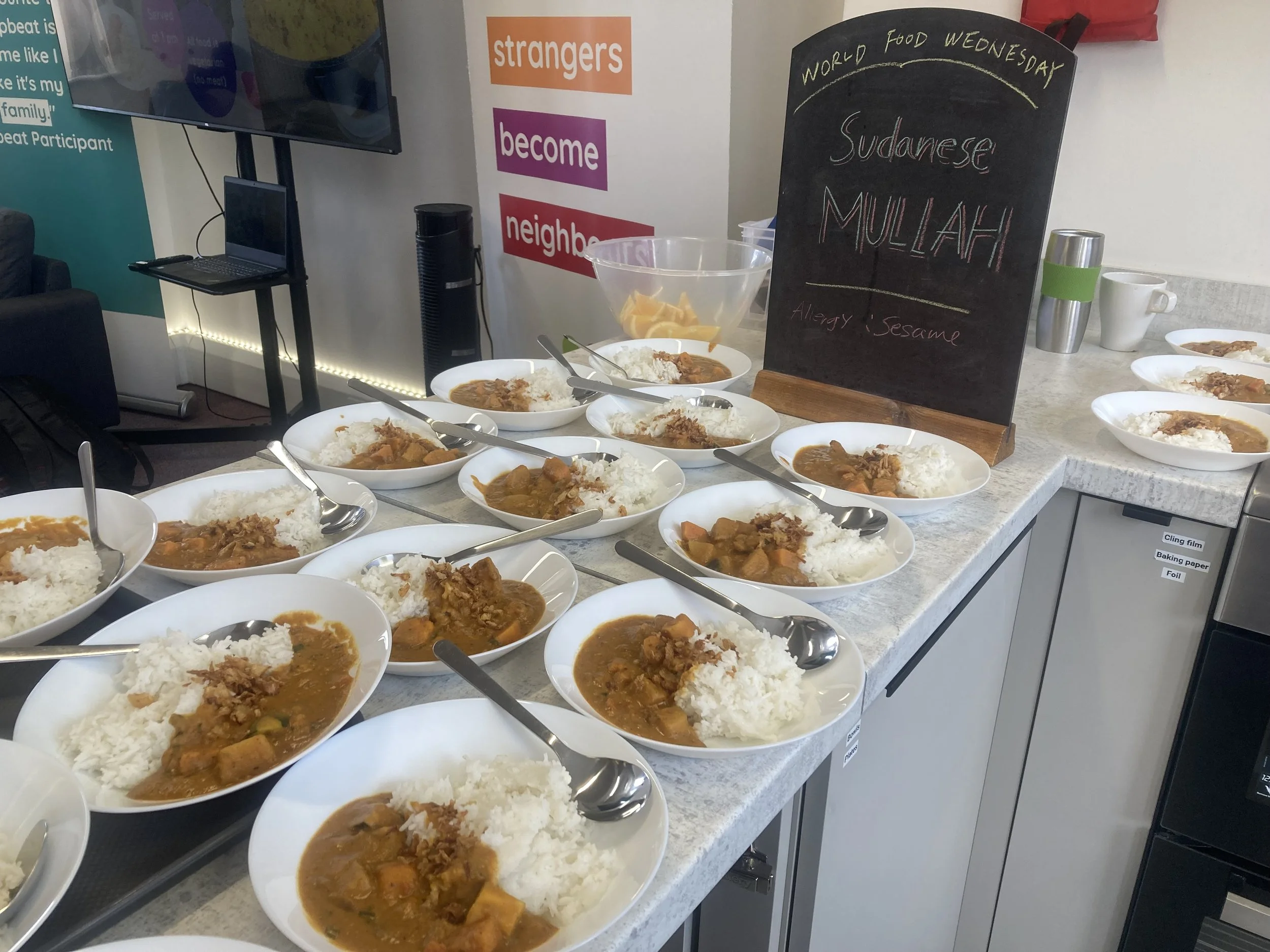
Zahra’s Recipe:
Ingredients (serves 4):
60g red lentils
1 small onion, finely chopped
½ medium potato, chopped
½ medium sweet potato, chopped
1 small carrot, chopped
½ small courgette, chopped
½ tin (200g) tomatoes
1 tablespoon tomato paste
1 teaspoon cooking oil
1 small clove of garlic, minced (or a tiny pinch from a garlic cube)
1 small sliver of ginger, minced (or a tiny pinch from a ginger cube)
1 teaspoon tahini
½ teaspoon coriander powder
⅓ teaspoon cumin powder
A tiny pinch of turmeric powder
A tiny pinch of black pepper
A tiny pinch of chilli pepper (adjust to your heat preference)
Salt to taste
A squeeze of fresh lemon juice
A small handful of fresh coriander, finely chopped
Method:
Wash the red lentils thoroughly and cook them in a pot of water until they are completely soft, then transfer them to a blender and process into a smooth paste.
Preheat your oven, toss the chopped potatoes and sweet potatoes in a bowl with oil and salt, and then roast them on a baking tray in the oven until they are cooked through and tender.
Heat a splash of oil in a large pan over medium heat and fry the chopped onions until they turn a rich, golden brown color.
Add the ginger and garlic cubes to the pan, stirring constantly for about a minute until they become highly fragrant.
Stir in the spices, salt, and chopped carrots, letting them coat evenly in the aromatic oil.
Pour in the tins of tomatoes and add the tomato paste, then cook the mixture down until the tomatoes are fully mashed and form a thick sauce.
Add the blended lentil paste and the chopped courgette into the pot, and then let them cook gently over low heat.
Gently fold the roasted potatoes and sweet potatoes into the simmering stew.
Spoon the tahini into the pot and stir the mixture well to ensure it fully dissolves and creates a creamy texture.
Pour in the fresh lemon juice and sprinkle the finely chopped coriander across the top of the stew.
Serve the finished dish hot with your choice of bread or rice, though it also goes perfectly with traditional “asida”!